
Thursday, August 18, 2016

Monday, May 2, 2016
Good News! Ringling Bros. Elephants to retire to Florida conservation center.
Ringling Bros. will continue, however, to present the performances of other animals including tigers, lions, horses, dogs and camels.
Netherland donkeys share their grief for a lost friend.
After living a sad life of neglect and loneliness outside in all weathers, Bram the donkey was moved to a sanctuary in the Netherlands. His health was suffering but he lived the last year and a half happily.
He and the other donkeys bonded immediately. Although he received a lot of love, and needed medical health care, he never fully recovered. He passed away recently.
The video shows his donkey friends paying their final respects. It is a sad time. Grieving the loss of one of their members is common for donkeys, according to a sanctuary worker. They make a particular noise when one of their friends dies.
They really do mourn, and is is said one occasionally dies from grief.
RIP Bram.
A beautiful little shelter dog gets a new home.
The production company "Save a Hound" specializes in producing videos aimed at generating interest in the plight of shelter animals.
These posts are put on Facebook and other public locations. Please show your support.
Go to SaveAHound and see how you can help.
And try to keep your composure as your watch this video.
Wednesday, April 27, 2016
Rainforest Rescue Update - Gito
In September 2015 a baby orang-utan was abandoned and left for dead in a urine soaked cardboard box in Borneo. After being found he was transported by motorbike for 9 hours to a rescue sanitary. Sanctuary volunteers have nursed him back to health. He was malnourished and dehydrated. He was nearly bald with grey flaking skin. Rescuers said he was left to die in the sun.
To help relieve him, coconut oil was massaged all over him to soothe and soften his itchy skin. He was also placed on a drip to rehydrate him.
He was named Gito by his rescuers.
Here is his story
He has made a remarkable recovery, and now is meeting new friends.
To learn more about these wonderful creatures and the sanctuary that saved him go to International Animal Rescue.
Donations are needed.
More....
Saturday, April 23, 2016
Florida passes new law to protect animals in HOT cars
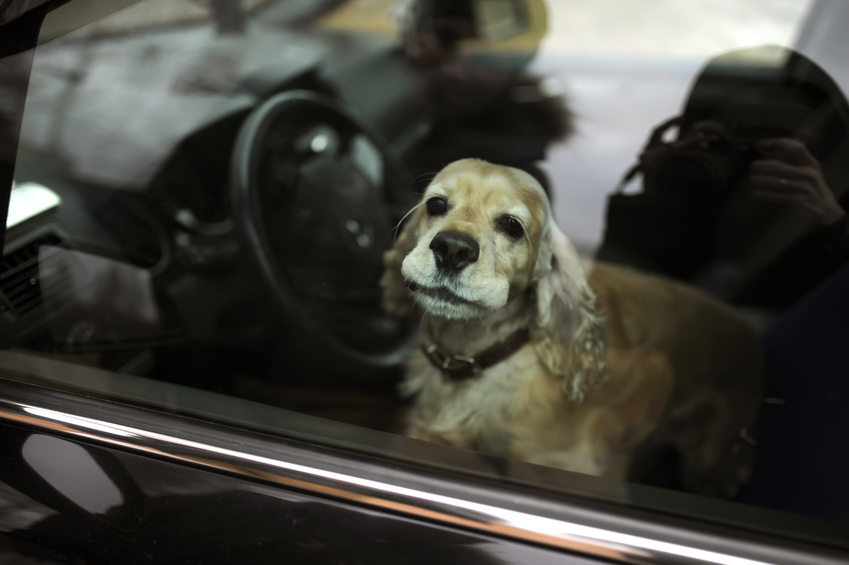
If you live in Florida and see an animal in a hot car you now have the right to intervene and break in. This includes smashing the windows if the car is locked. An animal has only a small (minutes) window of time before death in these situations.
Recently Republican Governor Rick Scott signed House bill 131 into law allowing Floridians to break into locked automobiles to rescue animals or vulnerable people who are in imminent danger of suffering harm.
The bill comes as a direct response to the growing number of incidents where pets and children have died because they are left in overheated cars.
If you are hesitant to take things into your own hands, please feel free to call 911 and report the scene.
There are also flyers you can place on cars if you think there is time for a safe response.
Go to http://www.mydogiscool.com
TULLY, A DOG WITH A NEED FOR A FOREVER HOME.

Tully needs a forever home. To find out more about him go to this page.https://www.facebook.com/175279419492399
Monday, April 4, 2016
Lolita, a killer Whale, needs to return to her home after 45 years in captivity.

Lolita is a 49 year old orca whale who lives in Miami, Florida at the Miami Seaquarium. She has been there in an undersized tank for over 45 years. She was originally captured off Washington State in 1970 and sold to the aquarium for $6,000.00.
Orcas are highly social animals who form intense emotional connections. However Lolita only has two dolphins as companions. Her mate Hugo died in 1980.
Living in her tiny tank with two dolphins, Lolita performs for the public on a daily basis.
There has been much public outcry for her release to rejoin her pod back in Puget Sound. Lolita’ s mother who is 82 years old is still believed to be freely swimming in the waters around Whidbey Island.
Find out more about the movement to retire Lolita to her rightful home. Go to http://www.orcanetwork.org.
Thursday, December 10, 2015
US War Veterans Benefit from Assistance Dogs.

For wounded veterans who could use some assistance in putting their life back together from an injury, an assistance dog can help provide the help they need to regain independence.
Canine Companions has provided assistance dogs to over 4500 people with disabilities.
Canine Companions is a 501 ( C ) (3) non profit organization that enhances the lives of people with disabilities by providing highly trained assistance dogs and ongoing support to ensure quality partnerships.
Who can apply: people with physical or developmental disabilities who can demonstrate that an assistance dog can improve their quality of life. Also professionals who provide physical or mental health care to clients .
Canine Companions trains four types of assistance dogs. Service teams that assist adults with physical disabilities by performing daily tasks. Hearing teams that alert the deaf and hard of hearing to important sounds. Skilled companion teams who enhance independence for children and adults with physical, cognitive and developmental disabilities. Facility teams work with a professional in a visitation, education or healthcare setting.
There is no charge for a Canine Companion assistance dog. Individual participants in the program are not responsible for payment.
There are substantial costs, however, involved in the lengthy process of breeding, raising, and training each Canine Companion assistance dog.
Canine Companions is funded by private contributions from individuals; gifts from businesses, civic groups, and service clubs. Also grants from corporations and foundations and ongoing fundraising activities such as special events and mailings.
People receiving a Canine Companions dog must successfully complete a two-week educational course at the regional center designed to match the person and dog and to prepare them to work together successfully. Each candidate is also responsible for the proper care, feeding, housings, and medical needs of the dog. The dog must be used in work it was trained for.
For more information, you can go to their website at http://www.cci.org. Canine Companions.
Tuesday, January 27, 2015
Raju, Free after 50 years of abuse.

"Raju cried as he was freed from 50 years of cruelty"
Under the cover of darkness a team from London based Wildlife SOS rescued an elephant that had been abused for 50 years. He was then transported to the Elephant Conservation and Care Center at Mathura, India. He walked free for the first time on July 4, 2014.
Members believe he was poached when he was a baby. He had suffered from beatings and painful spiked shackles for all those years. The owner had made the elephant beg for food, and sometimes Raju tried to survive by eating plastic and paper.
A year after hearing of Raju's situation, the team of Wildlife SOS along with 10 veterinarians, officials and six policemen seized the chained elephant from the Utter Pradesh area of India after receiving a court order.
"The team was astounded to see tears roll down his face during the rescue." Pooja Binepal, a spokesman for Wildlife SOS said, "It was so incredibly emotional for all of us. We knew in our hearts he realized he was being freed."
"Until we stepped in he had never known what it is like to walk free of his shackles-it is a truly pitiful case. But today he knows what freedom is and he will learn what kindness feels like and what its like not to suffer anymore."
The owner, as reported by the Times of India, was a drug addict and attempted to stop the rescue by blocking the road. He tried to provoke the animal and put more chains around his legs. But the rescue team successfully persisted. Raju calmly stepped into the rescuer's truck as if he knew he was being rescued. The team had waited until they got to a vet before the shackles were removed as they were designed to cause pain upon attempted removal.
Since his arrival at the sanctuary, Raju has received medical attention, been given proper baths and food and is well along in the rehabilitation process.
Wildlife SOS then launched a campaign to raise $17,000. to help Raju begin his new life in a new enclosure which would allow him to roam free with other elephants. "He'll spend the rest of his days living in dignity, free from suffering and pain.
Shortly after the rescue, the abusive owner petitioned the court to regain ownership of the elephant, and it was a struggle, but the story has a happy ending. See link below.
https://www.change.org/p/keep-raju-the-crying-elephant-free
Friday, January 23, 2015
Service dogs for the Autistic

job has popped up for them. We’re happy to report they’ve accepted the position and are making
great strides.
Autism continues to increase at a rate of 6-15 percent each year, and there are currently 3.5
million Americans living with an Autism Spectrum Disorder, according the Autism Society of
America.
Those who have dealt with getting the care needed for a loved one understand the daunting and
very expensive path they often find themselves walking down while searching for relief.
Enter Service Dogs for the Autistic.
Historically, service dogs have helped those in need by supplementing physical restraints, such
as being the eyes for someone who can’t see, or working with those having recurring seizures.
With Autistic children and adults, these service dogs are providing support that is more
emotional in a world that can be quite isolating. They provide patient and consistent
companionship while also keeping those afflicted safe through extensive training.
One of the fundamental symptoms of Autism is that he or she doesn’t connect well with other
people and/or their environment. Autism service dogs are proving to be that connection needed
by being a steady and consistent force in their day-to-day lives.
Another common symptom is severely Autistic people don’t detect potentially dangerous
situations and having a service dog stops them from walking into the street or leaving the house
unattended.
In addition to the priceless companionship they’re able to provide, these service dogs are
bringing down health care costs.
The health care fees for Autistic adults and children have settled deep into the billions per year
(and counting). These dogs are offering a safe way for families to cut costs by supplying them
with a full-time therapist and confidant.
Prices for a well trained dog start as low as $12,500. Not bad considering the U.S. cost of autism
over the lifespan is about $2.4 million for a person with an intellectual disability, or $1.4 million
for a person without intellectual disability.
Dogs continue to amaze, impress and greatly improve the lives of so many. They are truly our
sixth sense and change lives by seeing (and smelling) things we can’t detect. They deserve our
respect and appreciation as they patiently touch the lives of so many people.
For more information on Service Dogs for Autism visit:
https://www.pawswithacause.org/
http://4pawsforability.org/
http://autismdigest.com/service-dogs-and-autism/
Kate Brack, author.
Friday, January 9, 2015
The Story of Zeus.

Under the ordinance, pit bulls and rottweilers were to be “disposed” of on December 1st in compliance to the ban. It was reported that these types of dogs were running the streets and making people feel unsafe.
Behind the campaign was a local mother Joanna Armand and her family; namely her daughter O’hara Owens who is wheelchair-bound and depends on her service dog, Zeus, a pit bull. In addition to saving Zeus, they hoped to reiterate that savage dogs are at the fault of the owner and how they’re raised, not the breed.
The family expressed great love for their furry family member and praised his ability to help O’hara who is often in pain and wears a halo-brace due to severe neck problems. "If anything ever happened to him, I probably would just shut down," said Owens.
The MoveOn petition was created in November with the goal of gathering 100,000 signatures to stop the euthanization of the dogs. At the time of this post, the number of signatures had climbed to almost 350,000, and counting, even as the campaign is now closed.
This spoke volumes to the council of a town and the ordinance was repealed on the very day it was set to take effect. Being that the town is inhabited by under 1,000 people, there was a true need for nationwide support, and the response was overwhelming.
Mayor Timmy Lemoine stated receiving a warning from PETA claiming that if the council didn’t repeal the ordinance, PETA had enough money to shut the town of Moreauville down. “I wasn’t going to be known as the mayor that shut the village of Moreauville down because of this” said Lemoine.
The new agreement will enact a different statute that targets the owner and not the pet. Lemoine explained, “a citation will be issued like a ticket, if there’s a problem with the animal,” from there it will be up to the district attorney to decide the fine and repercussions for the owner and/or the animal.
This is a strong victory for the dog-loving community of the country while the efforts against breed specific legislation continues.
Author: Kate Brack
Saturday, April 26, 2014
Puppy Found in Dumpster
News this morning includes sanitation workers finding a 3 month old puppy in a dumpster, about to be crushed by a compactor. The puppy was injured and starving, but is recovering now in a foster home after humane vet treatment. Stories like this are everywhere, and so heartbreaking. Please consider encouraging people you know to contribute to animal rescue agencies so that they may get the word out and expand their facilities so that more is 
 available to persons who have no knowledge of how to place out an animal they no longer want. Also urge tougher regulations and laws to help protect our fellow creatures from ignorance.


Thursday, April 24, 2014
Woodland Park Zoo in Seattle Welcomes some Spring Arrivals
Woodland Park Zoo saves animals and their habitats through conservation
leadership and engaging experiences, inspiring people to learn, care and act.
Woodland Park Zoo exhibits nearly 1,100 animals representing almost 300 different animal species—from tiny insects to the largest land mammal on the planet, the elephant. Four new otter pups are recently welcomed. Woodland Park Zoo is an interactive zoo, well worth the trip.

Wednesday, April 23, 2014
The Zebra Mule Has Many Names

Pet Obesity is epidemic, just like most all American folks.
Overfeeding is not love. Obese pets like cats and dogs suffer from a multitude of diseases because of overweight. Diabetes. high blood pressure, musculoskeletal disease, arthritis, reduced life span, knee and joint problems. It is wise to work with your vet to determine the best diet for your pet. Just grabbing pet food off the grocery shelf can be putting dangerous foods in your pets life without any real intention by you. Granted food budgeting is an issue for many these days but a few minutes of analysis with a little knowledge of recommendations can help you pick out the best for within your budget. Good food combined with regular exercise (daily) can greatly enhance your pets health. And for you too if you are part of the exercise program. The Morris Animal Foundation is a good place to find references to good pet nutrition. There are some great sites on the web too that also explain portion control.
Saturday, April 19, 2014
Animals and Marijuana don't mix
Marijuana is a people drug not a pet drug.
There seems to be much controversy around whether it is safe to give animals the drug. But when in doubt don't. Even if it does help somewhat in some cases, while killing pain it also puts the animal in a confusing and scary condition. Have you ever had chemotherapy? It's like that apparently. More and more veterinarians are reporting poisonings. Marijuana in the 'raw' form is extremely toxic to animals Some tinctures may help but must be closely monitored. I noticed that many people were giving their pets the 'hail Mary' meds, supposedly more comfortably prolonging an impending painful death for a few weeks. But who is that prolonging for? The owner or the animal? I say take a toke (if you must) and then bring it to the vet for a humane euthanasia before it suffers a few more weeks of not only pain but also confusion and certainly discomfort from the effects of the marijuana.
Thursday, August 1, 2013
Guilty on Dog Abuse Case
I found this article on the web this morning.
I am constantly on the lookout for potential animal abuse around where we live too. Especially in the summer when so many clueless people leave their animals in hot cars.This article deals with tethering a dog to a rail and leaving it.
Have you ever been hopelessly confined to the end of a rope? I am often tethered to a medical device and believe me it is not fun to be so limited in movement, so I really feel it for tied up animals.
Granted a fencing system is a lot more expensive than a tie out rope, but consider what little trades you could make to make an animal's life a little more humane. A latte a day at $3.00 a pop is $90.00 a month. One half of a pen. Just saying....
Here is a link to the video and photos. Below is the text in case you don't want to bother with the video.
http://newjersey.news12.com/news/kisha-curtis-pleads-guilty-to-animal-cruelty-in-patrick-the-dog-case-1.5796832
"NEWARK - The 29-year-old defendant in the "Patrick the Dog" case has pleaded guilty to animal cruelty charges.
Kisha Curtis entered the plea Tuesday, according to the Essex County Prosecutor's Office. The plea comes on the day before Curtis was set to head to trial.
Curtis was accused of tying her pit bull Patrick to a railing in her Newark apartment before leaving the state in 2011. The emaciated dog was later found at the bottom of a trash chute.
Curtis had previously denied the charges, but today admitted she abandoned Patrick without food or water.
The guilty plea was not part of a deal and the assistant prosecutors handling the case say they will seek the maximum penalty of 18 months. "Miss Curtis obviously committed an act, and now she's paying the consequences for it," says Assistant Essex County Prosecutor David Feldman. The case sparked a call for tougher laws against mistreatment of pets.
Patrick has since made a full recovery. He being cared for by Patricia Smillie Scavelli, an administrator at Garden State Veterinary Specialists in Tinton Falls, where he was slowly nursed back to health.
Curtis is currently free on bail, and is set to be sentenced on Aug. 29."
Wednesday, May 22, 2013
North Shore Animal League Has Posted A Special Request
Cat Hit by Car Needs Your Help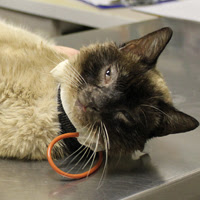

Champ's Story When North Shore Animal League America rescued this sweet Siamese cat from a municipal shelter, he was perilously close to death.
The cat, whom our rescue team named Champ, had been hit by a car and left gravely wounded on a roadside. His injuries included head trauma, a broken jaw and severe damage to both of his eyes.
Despite Champ’s slim odds of survival, the medical staff at North Shore Animal League worked tirelessly to save him. They immediately administered medication to alleviate his pain; next, they wired his jaw shut so it could have a chance to heal properly. Then, they inserted a feeding tube so Champ could receive essential nourishment to help him gain back his strength.
Their veterinary staff monitored Champ around-the-clock, concerned that the impact of the crash might have caused neurological problems. Day by day, he is growing stronger, and he shows no signs of brain damage.
But Champ isn’t out of the woods yet. Sadly, the injuries to his eyes were far too severe to be repaired, and he will require surgery to remove them. To find out more about this go to www.animalleague.org.
This evokes memories for me of our little cat who was born with the cerebral virus similar to cerebral palsy in humans. He had wandered to the road after someone left the gate open and was hit. He survived, but was on shaky ground for several weeks. It was our fabulous vet who pulled him through.
Another cat in our family whose name is Chance (for second chance). He was lost from somewhere in the farm land and ended up in a friend's garage with a big abscess in his side, probably from a coyote attack. We took him in and again our vet pulled him through. He was so traumatized he spent most of his first year with us on a chair under the dining room table!
It has been several years now and he has decided he can now rule over the other cats in his privileged old age.
We are glad help support all rescue agencies. My website will include all of them. The website has taken some time to build due to some extenuating circumstance, but will be built soon.
Subscribe to:
Posts (Atom)